
__ Feldklasse Pacorel: Save labour cost with mechanical weed management in between double or triple rows
Formerly known as DULKS ABRAH Damm.
Technical data
- Working width per ridge crest: max. 24 cm
- Number of ridges: 2, 3, 4, 6 or 8
- Mounting position: rear or middle mounted, (with optional steering System)
- Working speed: 1 – 4 mph, depending on culture
- Weight per unit: 50 kg

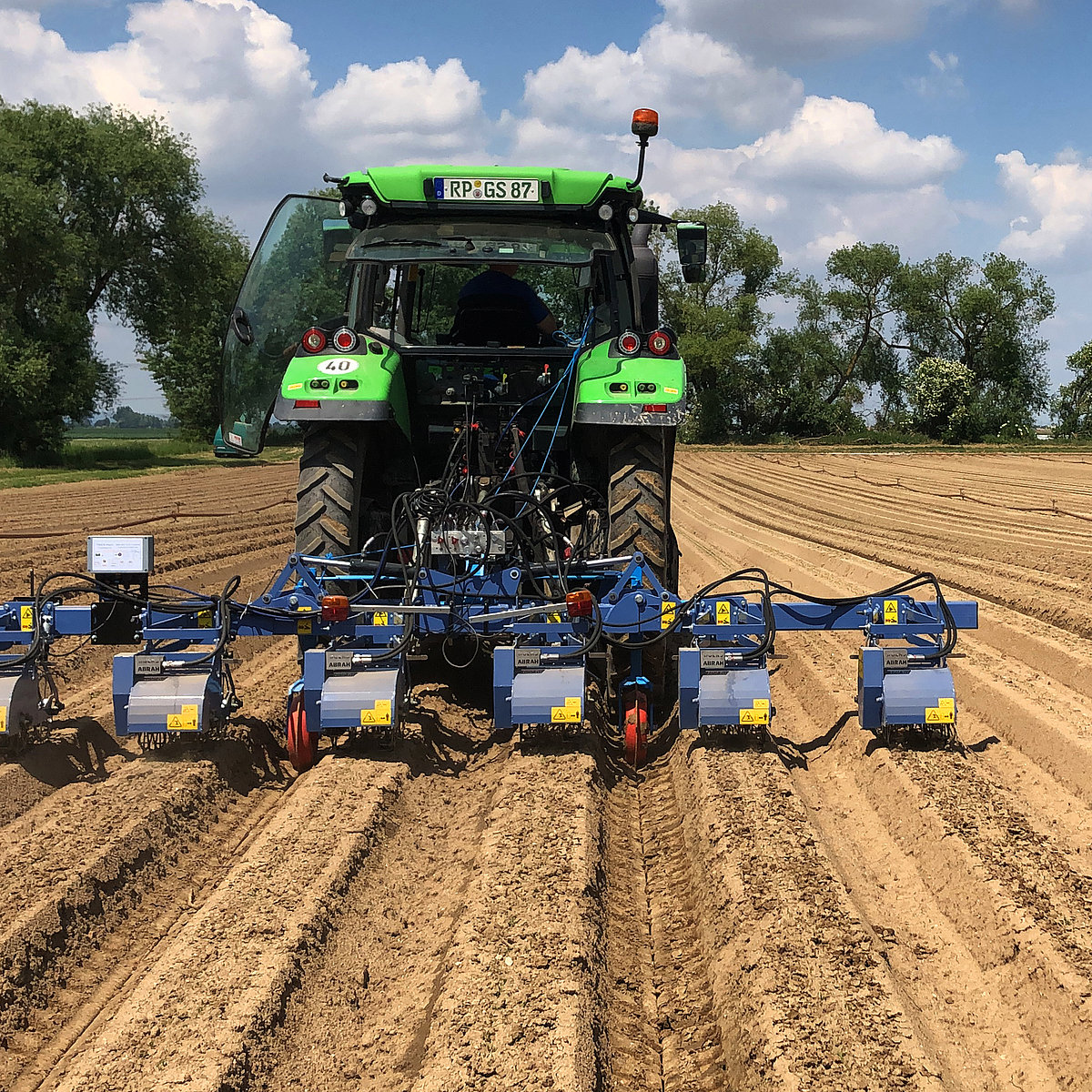
Excellent advantages in ridge cultivation
- possible for the first time: hoeing in double and triple rows
- cost savings compared to hoeing machines which only work outside the double or triple row: up to 50%
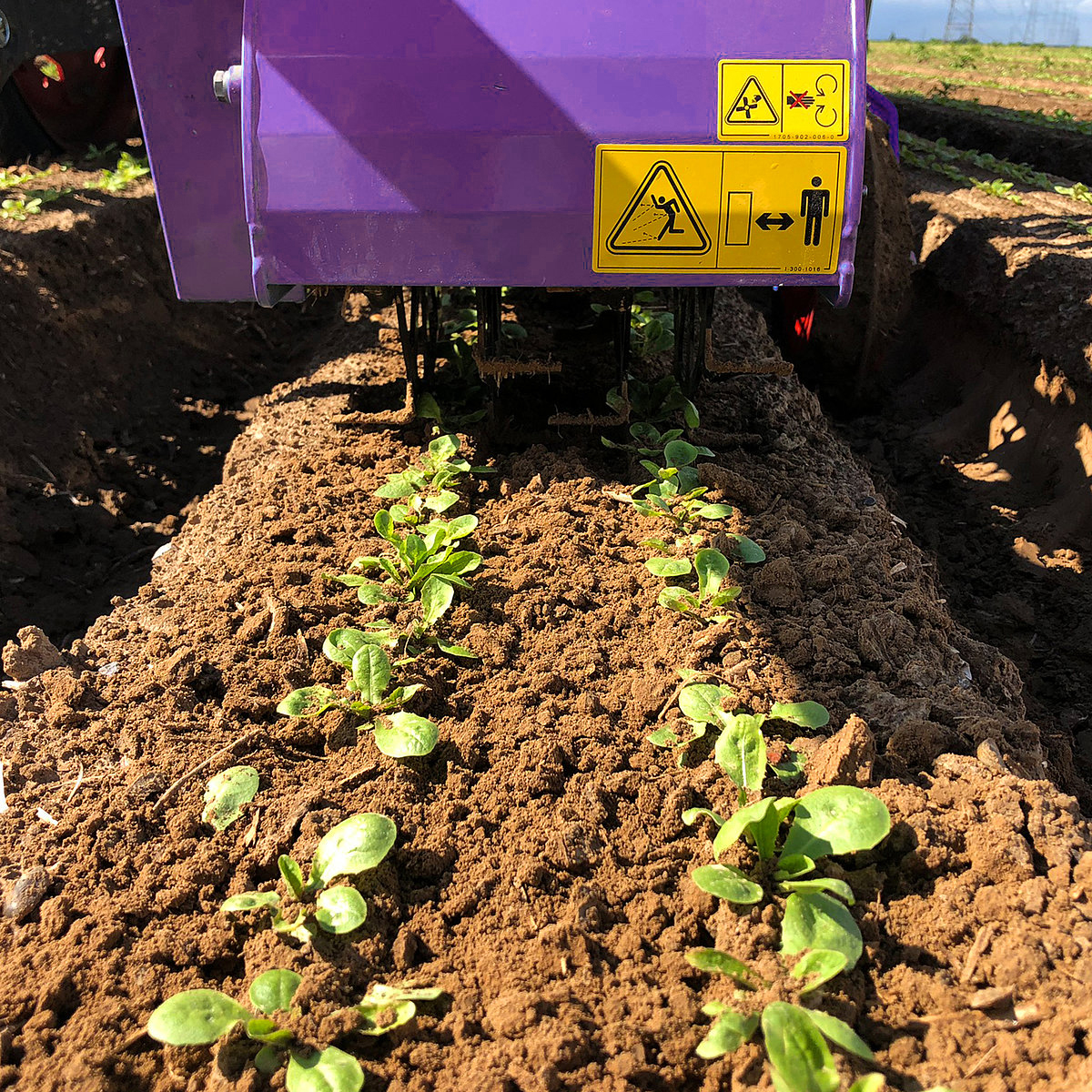
- works extremely close to the row (up to 1.5 cm), especially important for early crop stages
- very little remaining weed infestation
- weeds are levered out and removed
- even young carrots in crust remain intact
- soil remains in the ridge, does not trickle down on the sides and is not moved
- mineralization effect for the soil
- effective self-cleaning of the rotating blades
- no clogging in case of weed patches or strong weed infestation
- perfect adjustment to bed surface
- can deal with diverse soil types
- flexible row spacing adjustment
Ideally suited for the following plants and stages:
- carrots, baby carrots, parsnips, from sprouting to 3rd – 4th true leaf and approx. 8 cm height
- seed onions, spring onions, leeks, to approx. 11 cm height or strong leaning
- chicory from spouting to 2nd true leaf
- beetroot from spouting to approx. 2nd true leaf and 6 cm height
Flexibilität von Anfang bis Ende
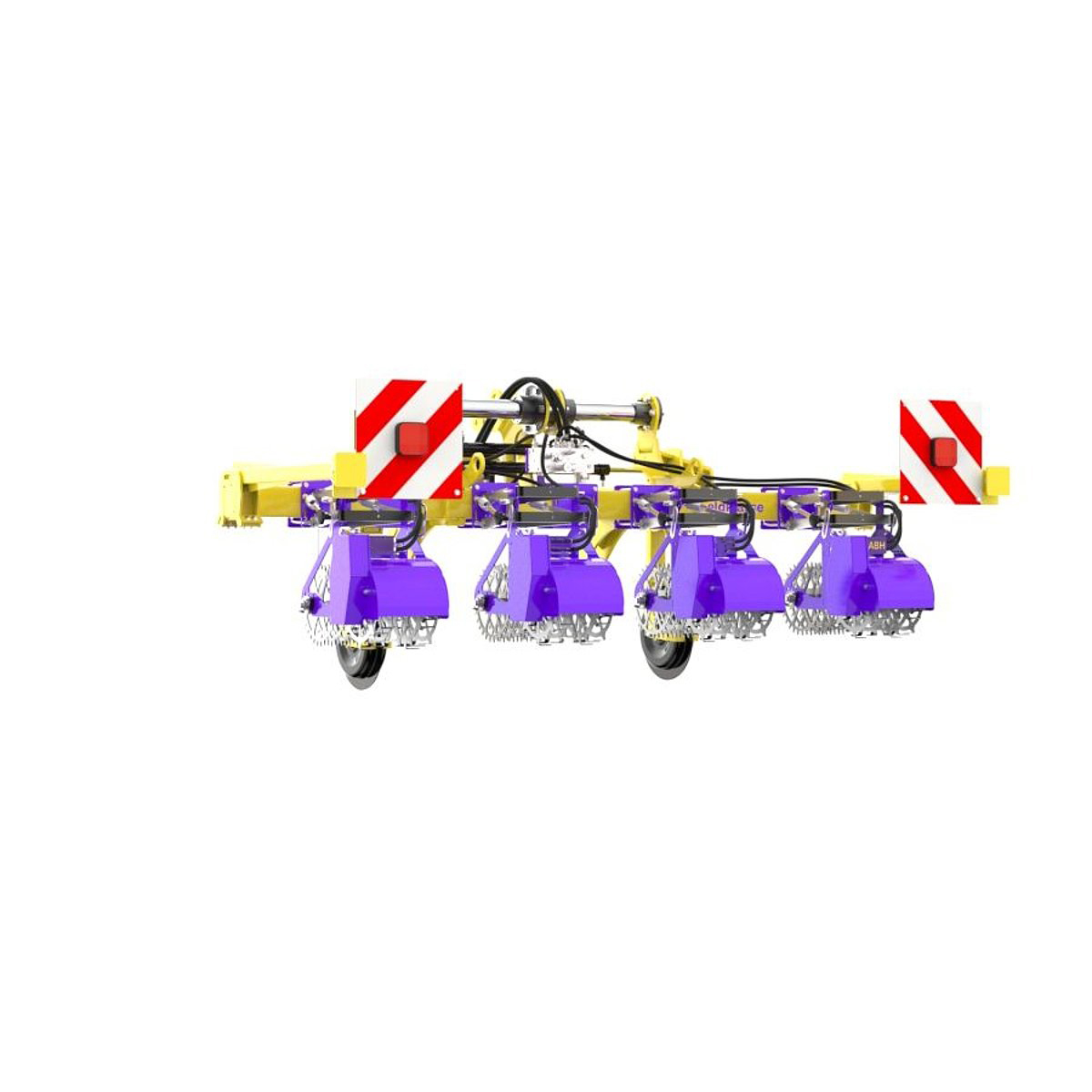
Our hoes can be configured individually using a modular system. Starting with the frame, you can choose from the following options:
Retrofit for an existing frame
If you already have a frame, we can simply combine our hoe with it. Mid-mounted version
Your implement carrier does not have to stay in the shed either. Our hoes are also available as mid-mounted implements. Steering frame
The steering frame is the right choice if you want to control the hoe manually. Parallel side-shift frame
The parallel side-shift frame combines precise hoeing with automatic camera guidance.
If you already have a frame, we can simply combine our hoe with it. Mid-mounted version
Your implement carrier does not have to stay in the shed either. Our hoes are also available as mid-mounted implements. Steering frame
The steering frame is the right choice if you want to control the hoe manually. Parallel side-shift frame
The parallel side-shift frame combines precise hoeing with automatic camera guidance.

Steering
Even the best hoe is of no use if everything has been hotted away by the end of the day. That is why we offer the following options for guiding the hoe along the row:
Manual electro-hydraulic steering via a joystick with an external seat on the hoe
This is especially useful when working without a tractor steering system. Electro-hydraulic steering with joystick control from the cab
This system is ideal when the tractor is guided by a GPS steering system and the driver can take care of steering the hoe. Fully automatic steering using Tillett & Hague camera technology
The automatic steering system has one main goal: maximum precision. The hoe steers itself automatically and catches nearly every weed.
This is especially useful when working without a tractor steering system. Electro-hydraulic steering with joystick control from the cab
This system is ideal when the tractor is guided by a GPS steering system and the driver can take care of steering the hoe. Fully automatic steering using Tillett & Hague camera technology
The automatic steering system has one main goal: maximum precision. The hoe steers itself automatically and catches nearly every weed.

Tools
Notched discs
The leading notched discs prepare the soil for the hoeing pass.
Their notches break up crusted soil and create a kind of predetermined breaking line along the row.
This has the major advantage of protecting young crop plants during hoeing.
Rotary shares
The rotary shares rotate at twice the driving speed.
On heavy soils, they cut through the growth cone of the weeds.
On light soils, they lift the weeds out and leave them on the surface.
Every row spacing can be adjusted
The notched discs have a width of 10 mm, and the rotary shares are available in widths from 20 to 55 mm.
Thanks to the simple clamping system on the axle, the tools can be easily adjusted to any row spacing.
The split clamp also makes it possible to remove or add individual tools quickly and easily, without much effort.
The leading notched discs prepare the soil for the hoeing pass.
Their notches break up crusted soil and create a kind of predetermined breaking line along the row.
This has the major advantage of protecting young crop plants during hoeing.
Rotary shares
The rotary shares rotate at twice the driving speed.
On heavy soils, they cut through the growth cone of the weeds.
On light soils, they lift the weeds out and leave them on the surface.
Every row spacing can be adjusted
The notched discs have a width of 10 mm, and the rotary shares are available in widths from 20 to 55 mm.
Thanks to the simple clamping system on the axle, the tools can be easily adjusted to any row spacing.
The split clamp also makes it possible to remove or add individual tools quickly and easily, without much effort.
On the ground of facts, versatility counts.
- suited for all types of soils
- sand, clay, loess, loam, peaty soils…
- stones are no problem
- can be used as a crust breaker before sprouting, making it possible despite incrustations/siltation.
FAQ
What are the advantages of ridge hoes?
Ridge hoes are specially designed for ridge cultivation. They remove weeds in double rows. Precise machines work especially close to the plants and can also hoe between double rows without damaging them. This saves expensive manual labor.
How are technically advanced ridge hoes equipped?
Particularly innovative ridge hoes feature hydraulically driven rotary tools and leading crust breakers. A modular system provides even more flexibility: automatic camera guidance, joystick control from the cab or directly on the hoe, different frames and tools — innovative ridge hoes can be adapted to all soil types and row widths.